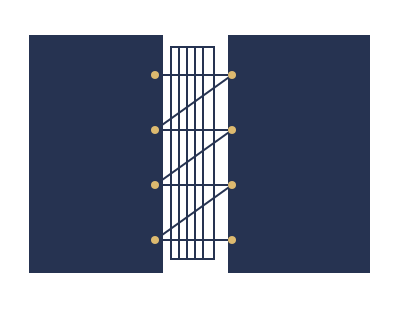
A book is a useful bit of engineering.
Notes from the folding board
A book starts becoming interesting before there is a single word inside it. Fold a few sheets, stack them together, and the paper begins to ask practical questions. Will the pages open easily? Where will the thread sit? How much cover can the spine carry? I enjoy those questions almost as much as filling the finished book.
I am Elio, an amateur bookbinder in Bristol. I make small notebooks at a borrowed table and keep the experiments that do not quite work beside the ones that do. A spine that pulls too tight is a better teacher than a photograph of a perfect one. It shows me exactly where an assumption has become a problem.
Most of my books use plain paper, cloth scraps, and a restrained amount of colour. I like an exposed stitch because it leaves the structure visible. The cover might be a deep blue or a warm ochre, but the pleasure is in the way the parts cooperate when the book is opened on a crowded desk.
The binding notes follow a recent experiment with a short landscape notebook. The about page explains why I am still measuring things twice with the same slightly battered ruler. These are working notes from a hobby, written for anyone who has ever opened a well-made object and wondered how its quiet little mechanisms fit together.